An AI chatbot on LINE OA that answers from your own documents
Not a scripted bot, and not an AI left to guess. We build a RAG system that pulls answers from your real manuals, pricing and terms — and hands the conversation to a person the moment it goes out of scope.
Problem
Why the bots you already have still cannot answer for you

Scripted bots
They only answer questions someone anticipated. The moment a customer asks something off-script it stalls, and the conversation lands back on your team anyway.

A general AI with no data connected
It reads fluently but answers from general knowledge. It does not know your prices or your terms, and when it does not know, it invents something that sounds right.

The AI Chatbot built into LINE OA
Fine for basic questions, but it answers from a question set you configure. It does not read your actual documents and does not reach your back office.
None of the three is wrong — they solve different problems. If the questions eating your team’s time are ones whose answers already exist in your documents but sit scattered across too many places to find in time, that is exactly what RAG is best at.
How it works
How RAG lets the AI answer from your documents
- Collect the documents you already answer customers withProduct manuals, price lists, service terms, FAQs and past conversations your team has already answered. Nothing needs rewriting from scratch — start with what exists.
- Turn them into a searchable knowledge baseThe content is stored so the system can retrieve it. It is not used to train the model, so it never becomes part of an AI vendor’s public knowledge, and it can be removed whenever you want.
- The customer asks in LINE as usualThe system retrieves the relevant passages first, then has the AI compose an answer from what it found — not from what the model happens to remember.
- Out of scope means a person takes over, immediatelyYou decide up front what the AI must never answer — special pricing or contractual commitments, for example — and the handover carries the full conversation with it.
The difference that matters most is step 3 — the AI answers from what it retrieved in your documents, not from what it absorbed off the internet. That is why every answer can be traced back to the page it came from.
Scope
What the engagement covers

Scoping and use-case design
We start by reading real conversations to see which questions cost your team the most time, then pick only the slice worth doing first. Not everything in one go.
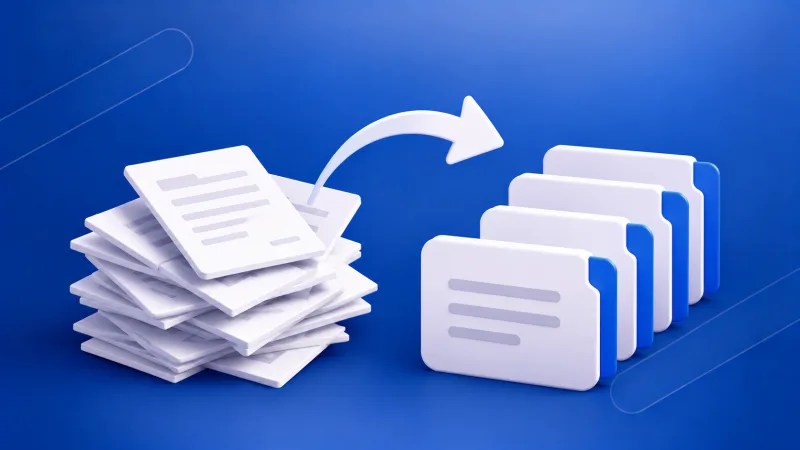
Getting your documents into a form the AI can use
Most of the work in a project like this lives here, not in the model. A document a person can follow and a document a system can retrieve from are not the same thing.
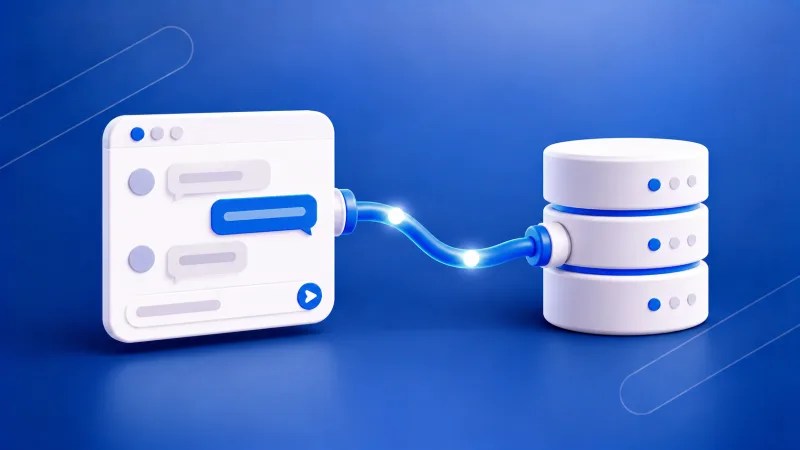
Connecting LINE OA to your back office
Wiring up the Messaging API, LIFF and whatever you already run — a product database or order status, say — so it can answer the things that change daily.

Guardrails and human handover
Defining what must never be answered, the tone to use, when to hand over, and what the system says when it is not confident — instead of guessing.

Measurement and ongoing tuning
Watching which questions go unanswered and which answers get asked again, then fixing the source document. A system like this improves through use, not through one round of configuration.

Handing it over so your team can run it
You update the documents yourself without calling us every time. We build it so you are not tied to an agency forever.
Before you start
Three questions worth asking before you sign with anyone
The first thing your IT team will ask, and it should be settled before anything starts: what the AI may see, what it may not, and who holds it.
The cost does not end at the subscription, and running it yourself is not automatically cheaper. Work the numbers before deciding.
AI can make something that does not exist look perfectly credible. That is precisely why the system must answer from documents and be able to say where each answer came from.
If a vendor cannot answer these three clearly, be careful — and that includes us.
Fit
Who this fits, and who it does not yet
A good fit if this sounds like you
- Chats arrive faster than your team can reply while the customer is still interested
- Repeat questions eat the sales team’s day so they never get to the work that closes
- You already have manuals, pricing or terms written down properly
- You want people answering the judgement calls, not the things a document search would solve
Not yet, if this is where you are
- Nothing is written down clearly — the answers live in one person’s head
- Most questions involve negotiation or on-the-spot judgement
- Chat volume is still comfortably within what your team can handle
- You want something 100% accurate with nobody watching it at all
If you land on the right-hand side we will say so plainly, and suggest starting with getting the documents in order — work worth doing whether or not AI ever enters the picture.
Why us
Why a marketing agency rather than a software house
We know LINE deeper than wiring up an API
Praphat Srisuma is one of four LINE Master Coaches in Thailand for 2026, out of thirty coaches certified by LINE, and one of only three certified on the API — the technical — track.
We measure it as marketing work, not just a system delivered
The NOW POINT campaign on GSB NOW, the LINE Official Account of Government Savings Bank — where our scope covered quiz-based points, per-user e-vouchers and Push Flex Message management — won Bronze for Excellence in Data-Driven Marketing at the Marketing Excellence Awards Thailand 2026.
The LLM and RAG systems we have already delivered sit in the automotive sector (a CRM campaign) and in banking. All of it is covered by confidentiality agreements, so we cannot name clients or publish the details here — get in touch and we will walk you through the scope and the real constraints we hit.
Want to know whether your case is worth it?
Send us the ten questions your customers ask most. We will tell you how many a system could genuinely answer and how many still need a person — before you pay for anything.
Discuss a project See our enterprise LINE services